
10 MISTAKES EVERY BEGINNER PHOTOGRAPHER MAKES

Shooting Everything in Auto Mode
Auto mode can be helpful when starting out, but relying on it too much limits your creative control. Learning how aperture, shutter speed, and ISO work together will dramatically improve your photography. Try experimenting with Aperture Priority or Shutter Priority mode before moving fully into Manual Mode
Ignoring Lighting
Photography is all about light. Harsh midday sunlight can create strong shadows and blown highlights, while soft morning or evening light often produces more pleasing results. Pay attention to where the light is coming from and how it affects your subject.
Not Checking the Background
A great subject can be ruined by a distracting background. Poles, clutter, bright objects, or random people can pull attention away from your main focus. Before taking the photo, quickly scan the edges of your frame.
Taking Too Few Photos
Many beginners only take one or two shots of a scene. Professional photographers often take dozens of images to capture the perfect moment. Experiment with angles, compositions, and settings. The more you shoot, the more you learn.
Holding the Camera Incorrectly
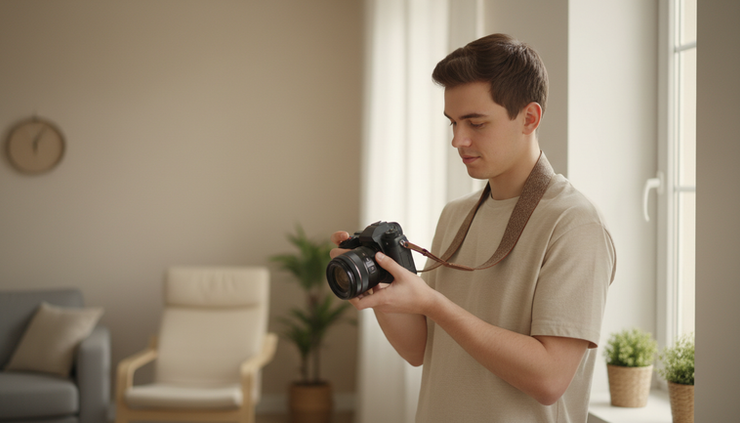
Camera shake can make photos look blurry, especially in low light. Use both hands, tuck your elbows in, and keep a stable stance when shooting. If possible, use a tripod for landscapes or nighttime photography.
Overediting Photos
Editing should enhance a photo, not overpower it. Heavy saturation, extreme contrast, or too many filters can make images look unnatural. Focus on subtle adjustments that improve the original while keeping it realistic.
Forgetting Composition Basics
Good composition helps guide the viewer's eye through the image. Beginners often place subjects directly in the center without considering balance or storytelling. Practice techniques like:
Rule of thirds
Leading lines
Framing
Symmetry
Negative space
Using the Wrong Focus Point
Sometimes the camera focuses on the wrong part of the image. Learning how to select your focus point manually gives you much more control. For portraits, focus on the eyes. For landscapes, focus about one-third into the scene for better depth.
Buying Too Much Gear Too Soon
You do not need the most expensive camera to take great photos. Many beginners spend too much money on equipment before learning the fundamentals. Start simple and master your current gear before upgrading.
Comparing Yourself to Other Photographers
Social media can make it seem like everyone else is better or improving faster. Every photographer develops at their own pace. Focus on improving one step at a time and building your own creative style.


Comments